



 About Us
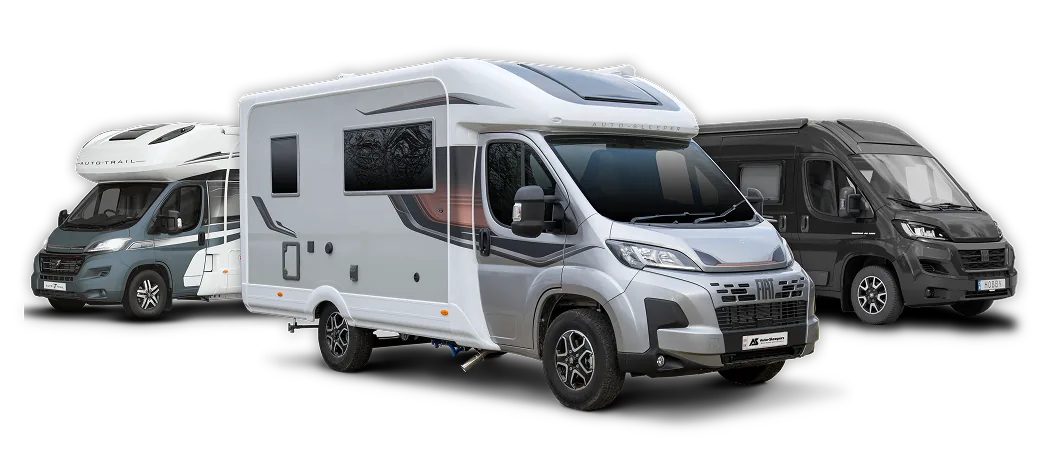
This is one of those questions that comes up all the time, and it’s easy to see why.
From the outside, motorhomes and campervans can look fairly similar. Both give you a place to drive, sleep, cook and travel at your own pace. Both offer freedom. Both can completely change the way you holiday.
But once you start looking properly, the differences become much clearer.
The simplest way to put it is this:
- A campervan is usually a converted van with living facilities inside.
- A motorhome is usually purpose-built as a living space on wheels.
That one difference affects almost everything else: space, comfort, storage, driving, facilities, cost and how you use it day to day.
Neither is automatically better. It really depends on how you like to travel.
Motorhomes vs Campervans at a Glance
Swipe across the table to compare all columns.
| Feature | Campervan | Motorhome |
|---|---|---|
| Size | Smaller and more compact | Larger, with more living space |
| Driving | Easier to park and drive day to day | Takes more planning, especially on narrow roads |
| Sleeping | Often fold-out or convertible beds | Often fixed beds or dedicated sleeping areas |
| Kitchen | Compact hob, sink and small fridge | More complete kitchen setup |
| Bathroom | May have no bathroom or a portable toilet | Often has a toilet and shower |
| Storage | Limited, but clever | More generous storage |
| Best for | Weekends, short trips, flexible travel | Longer holidays, touring and family travel |
| Cost | Usually more affordable | Usually more expensive |
| Comfort | Simple and practical | More like a small home on wheels |
The Main Difference Is Space
Space is usually the biggest deciding factor between a motorhome and campervan.
Campervans are compact. You might have a rock-and-roll bed, a small kitchen area, a table that folds away and seating that does more than one job. Everything has to work hard.
That can be part of the appeal. A campervan feels simple, flexible and easy to live with. For solo travellers, couples or people who like shorter trips, that compact setup can be exactly right.
Motorhomes give you that bit more room to breathe. Depending on the model, you might have:
- A fixed bed
- A separate lounge area
- More kitchen space
- A proper washroom with a toilet and shower
- Better wardrobe and cupboard storage
- More room to move around inside
- Separate sleeping and living zones
If you’re away for longer stretches, travelling as a family or simply prefer not to make the bed up every night, that extra space starts to matter quite quickly.
Comfort and Facilities on Motorhomes and Campervans
This is where the gap between a campervan and a motorhome usually widens. A campervan tends to keep things simple. You may have:
- A hob
- A small fridge
- A fold-out bed
- Basic storage
- A small sink
- Sometimes a portable toilet
- Sometimes no bathroom at all
For weekends away, festivals, short breaks and flexible road trips, that can be plenty. A motorhome feels more like a compact home. Depending on the layout, you may have:
- A proper kitchen
- A fixed bed
- A bathroom with toilet and shower
- A lounge or dinette
- Heating
- Hot water
- Larger storage areas
- More comfortable seating
- Separate areas for sleeping and relaxing
It’s less about making things work and more about being comfortable without thinking too much about it.
That doesn’t mean campervans are uncomfortable at all. It just means they ask you to travel a bit lighter.
Driving and Parking: Motorhome vs Campervan
This is where campervans have an advantage.
A campervan usually drives more like a normal van. It feels familiar, especially if you’ve driven vans before. Parking is easier, narrow roads are less intimidating and you can often use it as an everyday vehicle if you want to.
A motorhome takes a bit more awareness and getting used to driving. This doesn’t at all mean it’s daunting or difficult; it’s just something to consider.
You need to think more about:
- Height barriers
- Narrow lanes
- Car park spaces
- Turning circles
- Longer stopping distances
- Route planning
- Campsite access
That said, most people get used to driving a motorhome far more quickly than they expect. Modern motorhomes are designed to be comfortable on the road, and after a little practice, the size usually feels much less daunting.
One practical point to know: the licence you need depends on the motorhome’s maximum authorised mass, or MAM. GOV.UK’s motorhome licence guidance says a category C1 licence is needed for motorhomes between 3.5 and 7.5 tonnes, and a category C licence is needed above 7.5 tonnes.
For many smaller motorhomes and campervans under 3.5 tonnes, a standard category B car licence may be enough, but it is always worth checking the vehicle’s weight and your own licence before buying.
Speed Limits and Vehicle Classifications to Know
This is not the most exciting part of choosing between a motorhome and campervan, but it’s certainly worth knowing.
Speed limits can depend on the vehicle’s classification and weight. For motorhomes and motor caravans, the key threshold is usually 3.05 tonnes maximum unladen weight. Vehicles over that limit are subject to lower national speed limits on single and dual carriageways, although they may still travel at 70mph on motorways where permitted.
Always check the current GOV.UK speed limit guidance and the vehicle’s V5C.
Before buying, check:
- The V5C logbook
- The vehicle’s weight
- The number of belted travel seats
- Whether your licence covers it
- Whether any conversion has been properly documented
For converted campervans, you’ll need to check whether the V5C records the vehicle as a “motor caravan”, “van with side windows”, “panel van” or another body type. DVLA will only change a vehicle to “motor caravan” if it meets its requirements, including recognisable external features. See the official DVLA motor caravan conversion guidance.
Costs of a Motorhome vs a Campervan: Upfront and Ongoing
There’s no getting around it: campervans are usually the more affordable option. They often cost less to buy, can be cheaper to run and may be easier to store at home. Fuel economy is usually better too, simply because they’re smaller and lighter.
Motorhomes cost more, but you are getting more in return. With a motorhome, you’re usually paying for:
- More space
- Better facilities
- Larger beds
- More storage
- A proper washroom
- A more comfortable living area
- Better suitability for longer trips
So, it’s not really about which is “better value”; it’s about what you’ll actually use.
A campervan that suits your lifestyle perfectly is better value than a motorhome you rarely take out. Equally, a motorhome can be worth every penny if you use it regularly and enjoy longer, more comfortable trips.
Maintenance and Servicing
Both motorhomes and campervans need regular mechanical maintenance, just like any other vehicle.
You’ll need to think about:
- MOT
- Servicing
- Tyres
- Brakes
- Insurance
- Road tax
- Repairs
- Battery care
- Winter storage
Motorhomes and campervans also have a living area, which means there are extra things to look after. A habitation check is also commonly recommended because it looks at the living systems, such as gas, electrics, water, ventilation and safety equipment.
Separately, the NCC’s best practice guide sets out standards around sales information, handover and aftersales care for motorhome and touring caravan purchasers.
Storage and Everyday Practicality
This is another area where campervans can be easier.
Because they are smaller, campervans are often easier to keep on a driveway, store locally or use as a second vehicle. They can be practical for day trips, commuting, beach days, cycling trips and quick weekends away.
Motorhomes need more space, so you may need to think about:
- Where it will be stored
- Whether it fits on your drive
- Height restrictions
- Security
- Winter storage
- Access for cleaning and servicing
But motorhomes also give you much more storage inside. If you want to take outdoor chairs, walking gear, children’s bikes, bedding, food, clothes and everything else that comes with a longer trip, the extra space can be a huge benefit.
How You Plan to Travel in a Motorhome or Campervan
This is usually the question that settles the motorhome vs campervan debate.
A campervan may suit you if:
- You want short breaks and weekends away
- You prefer simple, flexible travel
- You like exploring towns, beaches and smaller roads
- You want something easier to drive and park
- You travel solo or as a couple
- You don’t need a full bathroom
- You want a vehicle you can use more often day to day
A motorhome may suit you if:
- You want longer holidays
- You travel with children, dogs or extra passengers
- You want a fixed bed
- You prefer having your own toilet and shower
- You like more storage
- You want to tour for a week or more at a time
- You want comfort in all weather
The more time you plan to spend inside the vehicle, the more a motorhome starts to make sense.
Motorhome vs Campervan for Families
For families, a motorhome is often the easier choice.
The extra space helps. You have more room for bags, toys, bedding, food, coats and wet shoes. Having a bathroom on board also makes life much easier when travelling with children.
That said, some families love campervans because they keep things simple. If you mainly use campsites and spend most of your time outdoors, a campervan can still work brilliantly.
The big question is whether you want the vehicle to be mostly a place to sleep, or somewhere you can properly live in when the weather turns.
In the UK, that certainly matters.
Common Myths About Motorhomes and Campervans
- Campervans are only for short trips: Not always. Plenty of people tour for weeks in campervans. You just need to be comfortable with a more compact setup.
- Motorhomes are difficult to drive: They are bigger, but most people adjust quickly. The main thing is to take your time and be aware of height, width and turning space.
- Campervans are always cheaper: Usually, yes, but high-end campervans can cost more than some used motorhomes. Always compare the actual vehicle, not just the category.
- You need a special licence for every motorhome: Not necessarily. Licence requirements depend on the vehicle’s maximum authorised mass. Many motorhomes are under 3.5 tonnes, but larger models may require C1 or C entitlement.
- Bigger is always better: Only if you need the space. A smaller vehicle that suits your travel style can be far more enjoyable than a larger one that feels stressful to use.
Final Thoughts: Should You Choose a Motorhome or Campervan?
Both motorhomes and campervans offer the same core thing: freedom.
They just offer it in different ways.
A campervan gives you simplicity, flexibility and ease. It suits people who want to move around, travel light and keep things relaxed.
A motorhome gives you space, comfort and convenience. It suits people who want longer trips, more facilities and a proper home-from-home feeling.
Neither is the “right” choice for everyone.
The best choice is the one that suits how you’ll actually travel.
If you’re still weighing it up, the best thing you can do is see both in person. Walk through the layouts. Sit in the lounge. Stand in the kitchen. Try the beds. Imagine a rainy evening inside. Imagine packing for a week away.
That usually tells you more than a spec sheet ever could.
If you’d like honest, practical advice, take a look at the motorhomes and campervans available at Jordans Leisure or speak to our team. We’ll help you work out what genuinely suits you, not just what looks good on paper.
Legal, licensing and travel rules can change. Always confirm the current rules that apply to your vehicle and journey. Guidance links were checked on .
Back to all blogs