



 About Us
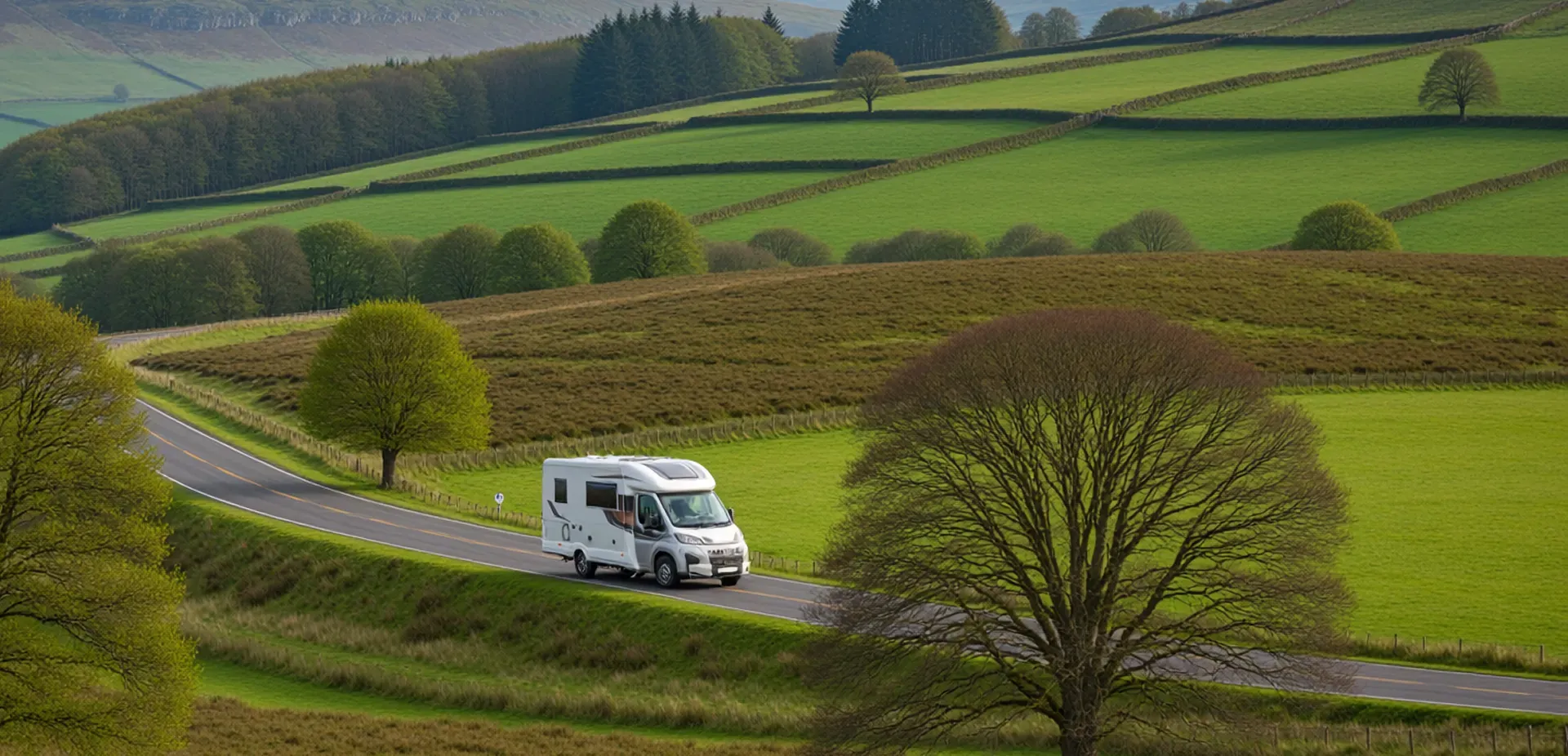
A motorhome, legally often referred to as a “motor caravan”, is a vehicle with a living space built into it. That’s the simple version.
Inside, you’ll usually find somewhere to sleep, cook, sit, store your things and, in many cases, use the toilet and shower. It means you can drive somewhere, park up and have your accommodation with you.
No towing. No hotel check-in. No unpacking into a different room every night. No wondering what the accommodation will be like when you arrive.
That’s the appeal for most people. A motorhome makes travel feel easier, more flexible and more personal, and in this blog we’ll explore all the details you’ll need to know before buying a motorhome.
Quick Answer: What Is a Motorhome?
A motorhome is a self-contained leisure vehicle designed for travel and overnight stays. It combines transport and accommodation in one vehicle, usually with a bed, kitchen, seating area, storage and often a bathroom.
Most motorhomes include:
- Driving cab
- Sleeping area
- Kitchen
- Dining or lounge space
- Storage
- Leisure battery
- Fresh and waste water tanks
- Heating and lighting
- Toilet and shower in many models
In short, it’s a small home on wheels.
Why Do People Love Motorhomes?
The biggest reason is the freedom that comes with it.
A motorhome lets you travel without being tied too tightly to one place, and if you like somewhere, you can stay longer. If the weather turns, you can move on. If you fancy a spontaneous weekend away, you already have somewhere to sleep.
There’s also something very comforting about having your own space with you. Your own bed. Your own kettle. Your own bathroom. Your own little routine.
Modern motorhomes can feel surprisingly comfortable too. Many have:
- Fixed beds
- Proper kitchens
- Warm seating areas
- Heating
- Hot water
- Good lighting
- Clever storage
- Toilets and showers
- Space for bikes, outdoor gear or pets
It’s not about roughing it. It’s about travelling with more comfort and control. At Jordans, we sell a range of luxury motorhomes and campervans, including Auto-Trail, Globe-Traveller and Hobby.
How Is a Motorhome Different from a Campervan?
People often discuss motorhomes and campervans loosely, but there are some general differences.
In simple everyday terms, a campervan is usually smaller and often built inside a van body. A motorhome is usually larger and more purpose-built, with more living space and more facilities, although some van conversions are also sold and registered as motorhomes or motor caravans.
A campervan can be brilliant for weekends and simple adventures. A motorhome is often better if you want more comfort, especially for longer trips. This is because they are typically larger, more self-contained and better equipped, often with separate living, sleeping and washroom areas—giving them extra convenience.
For a detailed side-by-side comparison, read our guide to motorhomes vs campervans.
The Different Types of Motorhome in the UK
This is where things can start to sound more technical than they need to be. In reality, most motorhomes fall into a few main categories.
1. Van Conversions
Van conversions are built inside a standard van body.
They are often the smallest and easiest type of motorhome to drive. They feel more compact, which makes them popular with couples, solo travellers and people who want something practical for shorter trips.
Van conversions are good for:
- First-time buyers
- Couples
- Short breaks
- Easier parking
- Narrower roads
- More flexible travel
They may have a compact kitchen, seating area, fold-out bed or fixed bed, and sometimes a small washroom.
2. Coach-Built Motorhomes
Coach-built motorhomes are what many people picture when they think of a motorhome.
They have a driving cab at the front and a purpose-built living area behind it. This gives you more space, more layout options and usually more comfort than a van conversion.
Coach-built motorhomes are good for:
- Longer holidays
- Families
- Couples wanting more space
- Touring around the UK or Europe
- Better storage
- More comfortable living
Many coach-built models include fixed beds, washrooms, proper kitchens and lounge areas.
3. Low-Profile Motorhomes
A low-profile motorhome is a type of coach-built motorhome without the large over-cab bed area.
They tend to look sleeker and may feel easier to drive than larger over-cab models, while still offering plenty of living space.
Low-profile motorhomes are good for:
- Couples
- Longer touring
- Comfortable driving
- Fixed-bed layouts
- People who want space without too much height
4. Over-Cab Motorhomes
Over-cab motorhomes have a raised area above the cab, often used as an extra bed.
They are popular with families because they can offer more sleeping space without making the vehicle much longer.
Over-cab motorhomes are good for:
- Families
- Extra sleeping space
- Children or guests
- Practical touring holidays
The trade-off is that they are taller, so you need to be more aware of height restrictions.
5. A-Class Motorhomes
A-class motorhomes sit at the larger, more premium end of the market.
The cab and living area are fully integrated, giving a spacious, high-end feel. They often have large windscreens, luxury interiors and generous layouts.
A-class motorhomes are good for:
- Premium touring
- Long trips
- Retired or semi-retired travellers
- Buyers wanting more luxury
- People who want maximum comfort
They are not usually where most people start, but they are something many owners move up to over time.
Motorhomes You Can Buy at Jordans
At Jordans, you’ll usually find a varied selection of new motorhomes, used motorhomes and campervans from trusted British and European manufacturers, including:
- Auto-Trail: A well-known British motorhome brand, with models ranging from compact family-friendly options like the Expedition and Imala to larger, more luxurious models such as the Grande Frontier.
- Hobby: German-built motorhomes and campervans known for practical layouts, clever storage and comfortable interiors. Popular ranges include the Optima De Luxe, Optima Ontour and Vantana van conversions.
- Globe-Traveller: Premium campervans designed for comfort in all seasons, with models such as the Explorer, Pathfinder and Falcon.
- Bravia Mobil: High-quality campervans with well-planned interiors and attention to detail, suited to buyers looking for a more refined van conversion.
- Victory Conversions: Hand-crafted campervans from our sister brand, including models such as the Victory Conversions Nomad.
- Auto-Sleepers and Roller Team: Other popular motorhome brands that may be available through our dealership, offering a range of layouts, sizes and specifications.
When comparing brands, don’t just focus on the name on the badge. Look closely at the layout, berth number, seatbelts, storage, condition and service history. These details will usually make the biggest difference to how well the motorhome suits the way you travel.
How Do Motorhomes Actually Work?
This is the bit that often worries beginners, but it’s much simpler once someone shows you. A motorhome usually runs on a few basic systems, including:
- Leisure battery: The leisure battery powers things like lights, water pumps and some internal equipment when you’re not plugged into mains electricity.
- Electric hook-up: On a campsite, you can often connect to mains electricity using an electric hook-up cable. This gives you more power for appliances and helps keep the leisure battery charged.
- Gas: Gas is commonly used for cooking and sometimes for heating, hot water or the fridge, depending on the motorhome.
- Fresh water tank: This stores clean water for the sink, shower and toilet system.
- Waste water tank: This collects used water from the sink and shower, which you empty at a designated disposal point.
- Toilet cassette: Many motorhomes have a cassette toilet, which is removed and emptied at a proper chemical disposal point.
- Heating and hot water: Most motorhomes have heating and hot water systems designed for leisure use, making them comfortable beyond just summer.
That might sound like a lot, but it quickly becomes routine. You check levels, top things up, plug in when needed and empty waste properly.
Most first-time owners get the hang of it after a couple of trips.
Are Motorhomes Difficult to Drive?
Not really. But it’s important to note that it will feel different to driving a standard car, which we’re sure you’ll be aware of.
A motorhome is bigger than a car, so you need to take your time and think about space. But most are designed to be comfortable to drive, especially on main roads and motorways.
When driving a motorhome, you’ll need to be aware of:
- Height
- Width
- Length
- Turning space
- Reversing
- Parking
- Low bridges
- Narrow lanes
The biggest tip is to slow down and plan ahead. Don’t rush into tight spaces. Use mirrors properly. Ask a passenger to guide you when reversing if needed.
After an hour or two, many drivers start to relax and driving feels like second nature.
What Licence Do You Need to Drive a Motorhome?
The licence you need depends on the motorhome’s maximum authorised mass, or MAM. This means the vehicle’s weight plus the maximum load it can legally carry.
The UK government says that to drive a motorhome between 3.5 and 7.5 tonnes MAM, you need a category C1 licence. To drive a motorhome over 7.5 tonnes, you need a category C licence. See the current GOV.UK motorhome licence guidance.
Many motorhomes are built to stay at or under 3.5 tonnes so they can be driven on a standard category B car licence, but you should always check the specific vehicle and your own licence.
Before buying a motorhome, check:
- Vehicle weight
- Payload
- Your licence categories
- Number of belted seats
- Whether you’ll travel fully loaded
- Any requirements if you are over 70 and renewing your licence
This is especially important if you’re looking at larger motorhomes.
What About a Motorhome MOT, Servicing and Habitation Checks?
A motorhome is both a vehicle and a living space, so it needs care in both areas.
- Vehicle servicing: This covers the engine, brakes, tyres, suspension, fluids and mechanical parts.
- MOT: Motor caravans are not classed as goods vehicles for MOT test purposes. Government MOT guidance states they fall into class 4 or 5 depending on seating capacity, regardless of size or weight.
- Habitation check: A habitation check looks at the living area. This can include gas, electrics, water systems, damp, ventilation, fire safety and appliances.
This is not the same as an MOT. The MOT checks roadworthiness. A habitation check looks at the part you live in.
For peace of mind, many owners choose to have a habitation check carried out regularly, especially before long trips or when buying used.
What Is Day-to-Day Life Like in a Motorhome?
Day-to-day life in a motorhome tends to have a slower rhythm.
You wake up, make a coffee, open the blinds and decide what the day looks like. Maybe you stay where you are. Maybe you move on. Maybe you walk into a nearby village, head to the beach, visit family or find a quiet campsite for the night.
There are practical jobs, of course.
You’ll need to:
- Fill up fresh water
- Empty waste water
- Empty the toilet cassette
- Charge devices
- Keep an eye on gas
- Plan where to stay
- Keep things tidy
But these jobs quickly become part of the routine. They don’t usually feel like a burden once you’re used to them. For many people, that slower, simpler rhythm is exactly the point.
Where Can You Stay in a Motorhome in the UK?
Motorhome owners usually stay at:
- Campsites
- Touring parks
- Caravan and Motorhome Club sites
- Certified Locations
- Aire-style motorhome stopovers and approved overnight parking spots
- Some pub stopovers
- Festivals and events
Overnight parking and wild camping rules vary across the UK, but motorhome owners should not assume they can simply park up and sleep anywhere. In England, Wales and Northern Ireland, you usually need the landowner’s permission unless you are on an official site or approved overnight stop.
In Scotland, access rights allow responsible lightweight wild camping, but they do not include motor vehicles, so motorhomes and campervans should use campsites, approved stopovers or places where overnight parking is clearly permitted. Check local restrictions before travelling.
What Should Beginners Look for in a Motorhome?
If you’re buying your first motorhome, don’t start with the fanciest model. Start with how you’ll use it.
Think about:
- How many people will travel
- How many people will sleep in it
- Whether you need a fixed bed
- Whether you need a bathroom
- How much storage you need
- Whether you’ll take bikes, pets or outdoor gear
- Whether you’ll use it in winter
- Where you’ll store it
- Whether you’re comfortable driving a larger vehicle
- What your licence allows
Layout matters most
A good layout makes everything easier in your motorhome. Ask yourself:
- Can you sit comfortably in the evening?
- Is the bed easy to use?
- Can you get to the bathroom at night?
- Is there enough kitchen space?
- Is there enough storage for real trips?
- Are there enough belted seats?
- Would it still feel okay on a rainy day?
That last one is important. In the UK, you need to imagine spending time inside.
Is a Motorhome Expensive to Run?
A motorhome costs more to run than a car, but less than many people expect if it’s used regularly and looked after properly.
You’ll need to budget for:
- Insurance
- Road tax
- MOT
- Servicing
- Habitation checks
- Tyres
- Fuel
- Gas
- Campsite fees
- Storage, if needed
- Repairs and maintenance
The real value comes from how much you use it.
If it sits on the drive for most of the year, it can feel expensive. If it gives you regular weekends away, longer holidays and more flexible travel, it can feel very worthwhile.
Should You Hire Before You Buy?
For some people, yes. This can be a great entry point when deciding to buy a motorhome for the first time. Hiring a motorhome before buying can help you understand what you like and what you don’t.
You may discover that:
- You definitely want a fixed bed
- You need a bigger fridge
- You prefer a separate shower
- You want something shorter
- You’re happy driving something larger
- You need more storage than expected
- You don’t need as much space as you thought
That said, visiting a good dealer and walking through different layouts can also teach you a lot.
Sometimes stepping inside is enough to know what feels right.
A Few Things Worth Knowing Before You Buy a Motorhome
Here are some practical beginner tips:
- Check your driving licence before looking at larger models.
- Look at layout before colour, upholstery or extras.
- Think about where you’ll store it.
- Ask about service history and habitation checks.
- Check how many belted travel seats it has.
- Think about payload, especially if travelling with family.
- Start with campsites while you build confidence.
- Don’t expect to know everything straight away.
- Ask questions, even if they feel basic.
Final Thoughts: Is a Motorhome for You?
A motorhome could be right for you if you like the idea of travelling with more freedom, comfort and control.
It gives you the option to go where you want, when you want, with your own space always with you. It makes weekends easier, longer trips more relaxed and holidays feel more personal.
It’s not about doing things perfectly. It’s about having the freedom to travel in a way that feels more your own.
You’ll learn as you go. You’ll work out what you use, what you don’t, where you like staying and how you like travelling. And once you get used to that flexibility, it can be quite hard to go back.
If you’re curious about getting started, take a look at the motorhomes available at Jordans Leisure or have a chat with our team. We’re always happy to talk things through—no pressure, just honest advice from people who know what makes a motorhome work in real life.
Legal, licensing and travel rules can change. Always confirm the current rules that apply to your vehicle and journey. Guidance links were checked on .
Back to all blogs